FEMA Compliance for Indian Startups: FDI, ECB, ODI & RBI Reporting Explained
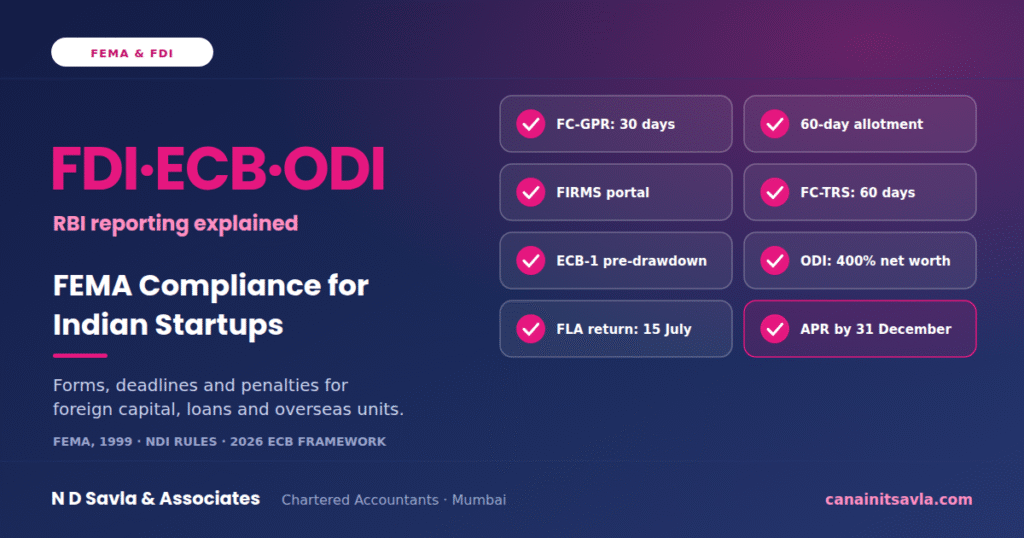
💱 FEMA & FDI 22 October 2026 · 12 min read Home › Blog › FEMA & FDI › FEMA Compliance for Indian Startups FEMA Compliance for Indian Startups: FDI, ECB, ODI & RBI Reporting Explained FEMA compliance for startups explained: FDI and FC-GPR, the 2026 ECB revamp, ODI limits and Form FC, plus RBI reporting deadlines on the FIRMS portal. NS CA Nainit Savla N D Savla & Associates, Chartered Accountants, Andheri East, Mumbai • Published 22 Oct 2026 FEMA & FDI FDI·ECB·ODI RBI reporting explained FEMA Compliance for Indian Startups Forms, deadlines and penalties for foreign capital, loans and overseas units. FEMA, 1999 · NDI RULES · 2026 ECB FRAMEWORK FC-GPR: 30 days 60-day allotment FIRMS portal FC-TRS: 60 days ECB-1 pre-drawdown ODI: 400% net worth FLA return: 15 July APR by 31 December N D Savla & Associates Chartered Accountants · Mumbai canainitsavla.com The moment an Indian startup takes money from a foreign investor, borrows from an overseas lender or sets up a subsidiary abroad, it steps into the territory of the Foreign Exchange Management Act, 1999, known as FEMA. Most founders know the headline rules, but the real risk lies in the paperwork that follows: issuing shares within the permitted window, filing the right form on the Reserve Bank of India’s FIRMS portal, registering a loan before drawing it and reporting overseas investments every year. Missed filings do not usually stop a business overnight, but they surface in due diligence, delay funding rounds and attract late submission fees or compounding applications. FEMA compliance for startups therefore covers three broad flows of money: inbound capital through foreign direct investment, borrowing from abroad through external commercial borrowings, and outbound capital through overseas direct investment. This guide explains each flow in plain language, with the forms and timelines that apply, reflects the major 2026 changes to the ECB framework and the NDI Rules, and ends with a checklist founders can use to stay ahead of the regulator. Details change often, so confirm each point against the current RBI notification before acting. Why Does FEMA Matter for Indian Startups? FEMA matters because it regulates every cross-border financial transaction a startup undertakes, and non-compliance is treated as a civil contravention that can lead to penalties and a costly regularisation process. The Act is administered by the Central Government, which frames rules, and by the RBI, which issues regulations and directions. For startups, three sets of rules do most of the work. 📥 FDI: Inbound Capital The Foreign Exchange Management (Non-debt Instruments) Rules, 2019, read with the Mode of Payment and Reporting Regulations, govern foreign direct investment in equity instruments. 🏦 ECB: Borrowing Abroad The Borrowing and Lending Regulations, 2018, as amended, govern external commercial borrowings. 🌍 ODI: Outbound Capital The Overseas Investment Rules, Regulations and Directions, 2022, govern investments abroad. 🖥️ FIRMS: Online Reporting Reporting is largely online through the RBI’s Foreign Investment Reporting and Management System, known as FIRMS. The authorised dealer bank acts as the first point of contact for many transactions. Founders who plan these filings early, along with their company law and tax compliance, avoid the problems that surface when a new investor or lender asks for a compliance certificate. If you are still setting up, see our startup registration, Startup India and private limited company pages. How Does FDI Work for a Startup and What Must It Report? Foreign direct investment in a startup means a person resident outside India subscribing to or buying equity instruments of an unlisted Indian company, and it is permitted under the automatic route in most sectors, subject to sectoral caps, conditions and pricing guidelines. After the investment, the company must report the issue on the FIRMS portal, generally within 30 days of allotment. Eligible instruments for FDI include equity shares, compulsorily convertible preference shares and compulsorily convertible debentures, and DPIIT-recognised startups can also issue convertible notes to foreign investors, subject to conditions on the size of each tranche and the period of conversion. Instruments that are optionally convertible or redeemable are treated as debt and fall under the ECB framework rather than FDI, which is a frequent trap for founders who use a convertible instrument without checking the terms. For unlisted companies, the issue price must be supported by a fair value determination by a SEBI-registered merchant banker, a chartered accountant or a cost accountant, using an internationally accepted pricing methodology. Consideration must come through banking channels, and equity instruments must be issued within 60 days of receipt of the money, failing which the amount has to be refunded. The rules are amended from time to time, and the consolidated text updated up to 12 June 2026 is available on the RBI website. For help with filings, see our FDI filing with RBI and FC-GPR filing services. Step-by-Step: Taking FDI Into Your Startup Confirm Sector and Route. Check whether the startup’s activity falls under the automatic route or needs government approval, and whether sectoral caps or conditions apply. This is decided before the term sheet is signed. Choose the Right Instrument. Pick equity shares, CCPS, CCDs or, for a DPIIT-recognised startup, a convertible note that meets the conditions. Avoid optionally convertible terms unless you are prepared to follow the ECB rules. Value the Shares and Fix the Price. Obtain the required valuation certificate and ensure that the issue price is not below fair value. Keep the valuation report with the allotment records. Collect Investor KYC and Receive Funds Properly. Receive the money through banking channels into the company’s account and obtain the foreign inward remittance certificate and the investor’s KYC from the bank. Record the date of receipt carefully, since the 60-day clock starts there. Pass the Corporate Resolutions and Allot Within 60 Days. Obtain board and shareholder approvals, file the necessary company law forms and allot the instruments within 60 days of receiving the consideration. Report on FIRMS Within 30 Days. File the Single Master Form with Form FC-GPR within 30 days of allotment, attaching the valuation, FIRC,
FEMA Compliance for Indian Startups: FDI, ECB, ODI & RBI Reporting Explained Read More »